
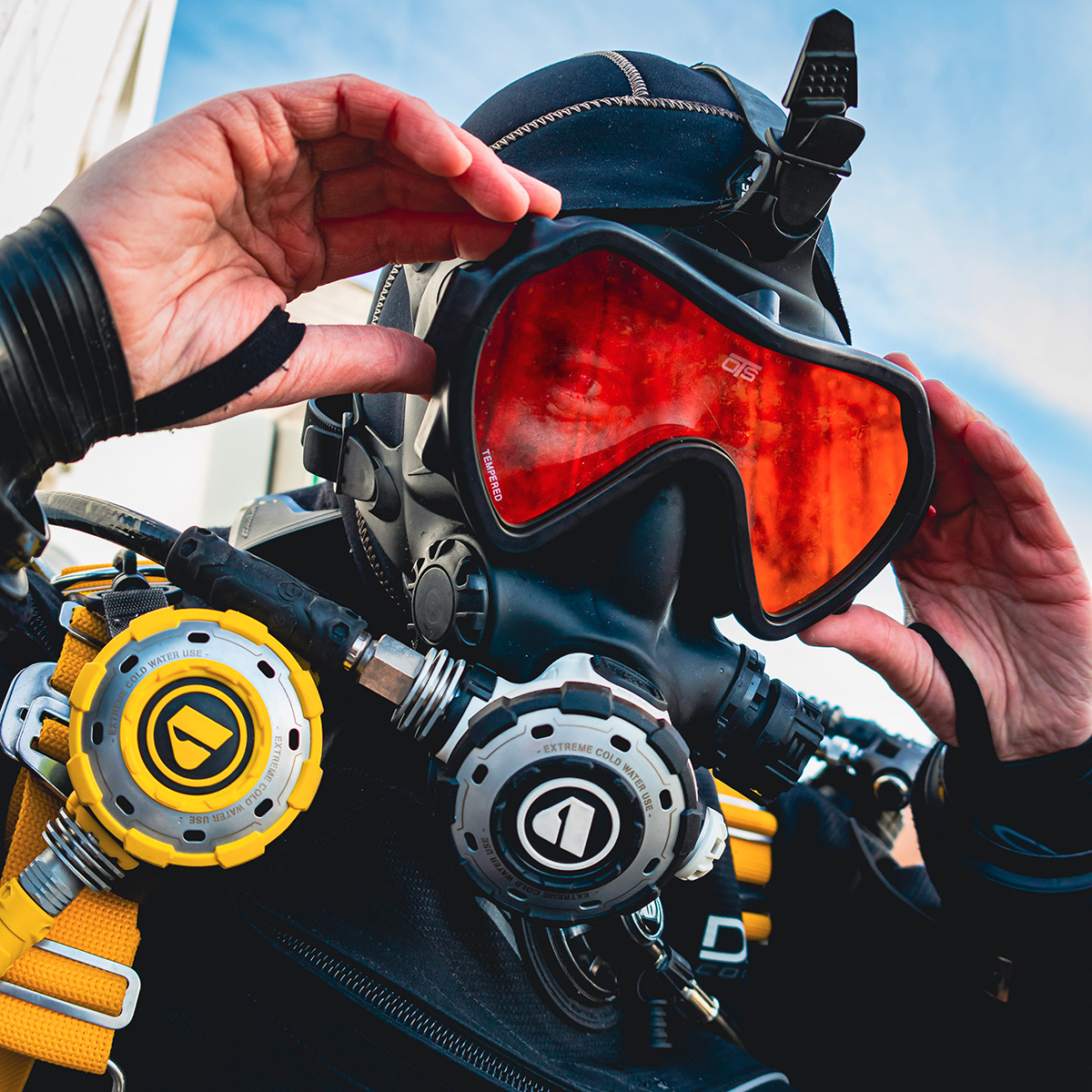
Full Face Mask Diver Specialty
Working divers, such as public safety divers, use full face masks because they protect the eyes and nose from contaminants in the water, provide comfort in cold water, and allow for communication. If you're interested public safety diving, scientific diving, or venturing into extremely cold-water, then learning to dive with a full face mask is definitely for you. Because full face masks allow you to breathe from your nose, they are also beneficial for those who have difficulty using standard scuba masks. Diving with a full face mask offers a different experience and that alone may be reason to give it a try.
You need to be a PADI Open Water Diver who is at least 12 years old to enroll in the Full Face Mask Diver course.
Availability: Contact us for booking information

Key Aspects of the Specialty Course:
- Benefits: Allows breathing through the nose and mouth, reduces jaw fatigue, provides superior thermal protection, and allows integration with underwater communication systems.
- Training Content: Focuses on gear configuration (e.g., Ocean Reef, OTS Guardian), proper sealing techniques, and specialized emergency procedures, such as switching to an alternate air source if the mask fails.
- Course Structure: Typically includes a knowledge session, a confined water (pool) session, and at least two open water training dives.
- Prerequisites: Generally requires an Open Water Diver certification and, depending on the agency, often a minimum age of 12.
- Applications: Useful for cold water diving, contaminated water, or for those who struggle with traditional regulator mouthpieces
Key Skills Taught:
- Emergency Procedures: Removing and replacing the mask underwater.
- Clearing: Managing water in the mask using, for example, the surface air valve or the purge valve.
- Communication: Proper techniques for operating underwater radio systems.
Divers should seek training to handle the specific safety considerations of wearing a full-face mask, as emergency procedures differ from standard scuba equipment.